USD1 Hits $5 Billion Market Cap As Trump Hails ‘Built In America’ Stablecoin

bitcoinistPublished on 2026-01-31Last updated on 2026-01-31

Abstract

USD1, a stablecoin issued by World Liberty Financial, has surpassed a $5 billion market cap, becoming one of the largest dollar-pegged tokens. It maintained its $1 peg despite increased market interest, aided by new exchange listings and incentives. The milestone was celebrated by the Trump family on social media, boosting mainstream attention. Growth was driven by improved liquidity, institutional adoption, and large fund movements. However, questions remain about reserve transparency and regulatory compliance, with the issuer seeking a U.S. banking charter. Notably, while USD1 thrived, other related speculative tokens fell sharply, highlighting a market shift toward stability over volatility.

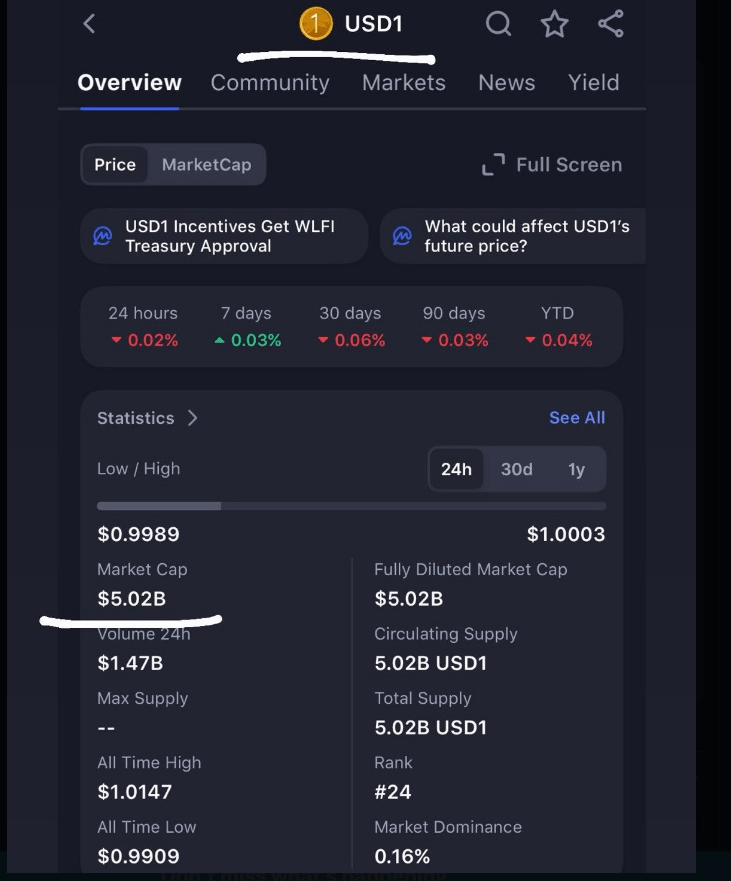
USD1 has pushed past a $5 billion market cap, a rapid climb that has attracted wide attention across crypto markets. Reports say the stablecoin, issued by World Liberty Financial, now ranks among the largest dollar-pegged tokens.

Trading has stayed close to the $1 peg even as overall market interest spiked. Some exchanges have added new pairs and incentives, which helped volume swell over recent weeks.

Market Milestone Reached

Reports note that members of the Trump family celebrated the milestone on social feeds, calling USD1 “Built in America.” US President Donald Trump was quoted praising the token as an example of American engineering and finance coming together.

That message boosted mainstream interest and brought a fresh round of headlines. At the same time, other tokens linked to the same circle have fallen sharply, showing mixed fortunes across related projects.

How The Coin Grew

Liquidity and listings matter. Based on exchange disclosures, USD1 gained listings and earning programs that made the stablecoin easier for traders and institutions to hold massive balances.

This lowered technicalities for movement and helped the coin’s market valuation rise quickly. On-chain activity shows large inflows at times, while prices stayed steady around the dollar peg.

Reports say some big holders moved funds between platforms, which pushed reported market cap numbers higher on public trackers.

Trust And Regulation

There remain some queries over transparency in reserves, along with some queries from banking regulators and observers about a clearer audit and a specific banking arrangement for issuance.

Total crypto market cap currently at $2.78 trillion. Chart: TradingView

According to reports, the issuer has applied for charter and is taking steps to be in compliance with US requirements. While this has reassured some of the investors, others claim they still need proof to gain their trust.

The regulatory angle is shaping future plans for expansion and institutional use.

Comparisons And Contrast

USD1’s rise has not lifted every project tied to the same names. One meme token linked to the group dropped more than 90% from its peak.

Investors are splitting between stable, utility-style holdings and speculative bets that have lost steam. Reports say the stablecoin’s steady peg made it attractive to users fleeing volatility elsewhere.

This split highlights a broader shift: some money prefers a token that holds value closely to the dollar, while other funds chase quick gains.

Featured image from Unsplash, chart from TradingView

Related Questions

QWhat is the current market cap of the USD1 stablecoin and why has it attracted attention?

AThe USD1 stablecoin has reached a market cap of $5 billion, attracting wide attention due to its rapid growth and its position as one of the largest dollar-pegged tokens.

QWhich company issued the USD1 stablecoin and how did the Trump family react to its milestone?

AThe USD1 stablecoin was issued by World Liberty Financial. Members of the Trump family, including Donald Trump Jr., celebrated the $5 billion market cap milestone on social media, hailing it as 'Built in America'.

QWhat are two key factors that contributed to the rapid growth of USD1's market valuation?

ATwo key factors were increased liquidity through new exchange listings and earning programs, which made it easier for traders and institutions to hold large balances, and large on-chain inflows that pushed the reported market cap higher.

QWhat are some of the regulatory concerns or queries surrounding the USD1 stablecoin?

AThere are queries over the transparency of its reserves and calls from banking regulators and observers for a clearer audit and a specific banking arrangement for its issuance. The issuer has applied for a charter and is taking steps to comply with US requirements.

QHow does the performance of USD1 contrast with other tokens linked to the same group, and what does this highlight?

AWhile USD1 has grown steadily, other tokens like a related meme coin dropped over 90% from its peak. This contrast highlights a broader market shift where some investors prefer stable, utility-style holdings, while others chase speculative, volatile bets.

Related Reads

When Notices Become Law: What Does the Draft Network Crime Prevention Law Mean for the Crypto World?

The draft "Cyber Crime Prevention Law" released by Chinese authorities on January 31, 2026, marks a significant shift from previous regulatory notices to formal legislation, fundamentally altering the legal landscape for cryptocurrency activities in China. Unlike earlier policies focused on financial risks, this law adopts a criminal governance approach, specifically targeting three core areas: OTC transactions, technical development, and public node operations. Key provisions include Article 26, which redefines "knowledge" in OTC trading, making it easier to prosecute those involved in transferring illicit funds using virtual currencies. Articles 19 and 31 extend liability to those providing technical support, such as developers or promoters, with Article 2 asserting extraterritorial jurisdiction over overseas entities serving Chinese users. Additionally, Article 40 requires blockchain nodes to monitor and block illegal activities, challenging the feasibility of permissionless networks. Legal experts note that while penalties may start with fines, severe cases could lead to criminal charges. The law reflects a broader trend from administrative bans to criminal regulation, emphasizing compliance through strict KYC, AML controls, and geo-blocking for Chinese users. For the crypto industry, this law establishes compliance as a critical survival threshold rather than an optional measure.

marsbit9m ago

When Notices Become Law: What Does the Draft Network Crime Prevention Law Mean for the Crypto World?

marsbit9m ago

Trading

Spot
Futures
活动图片